
Keeping the Fire
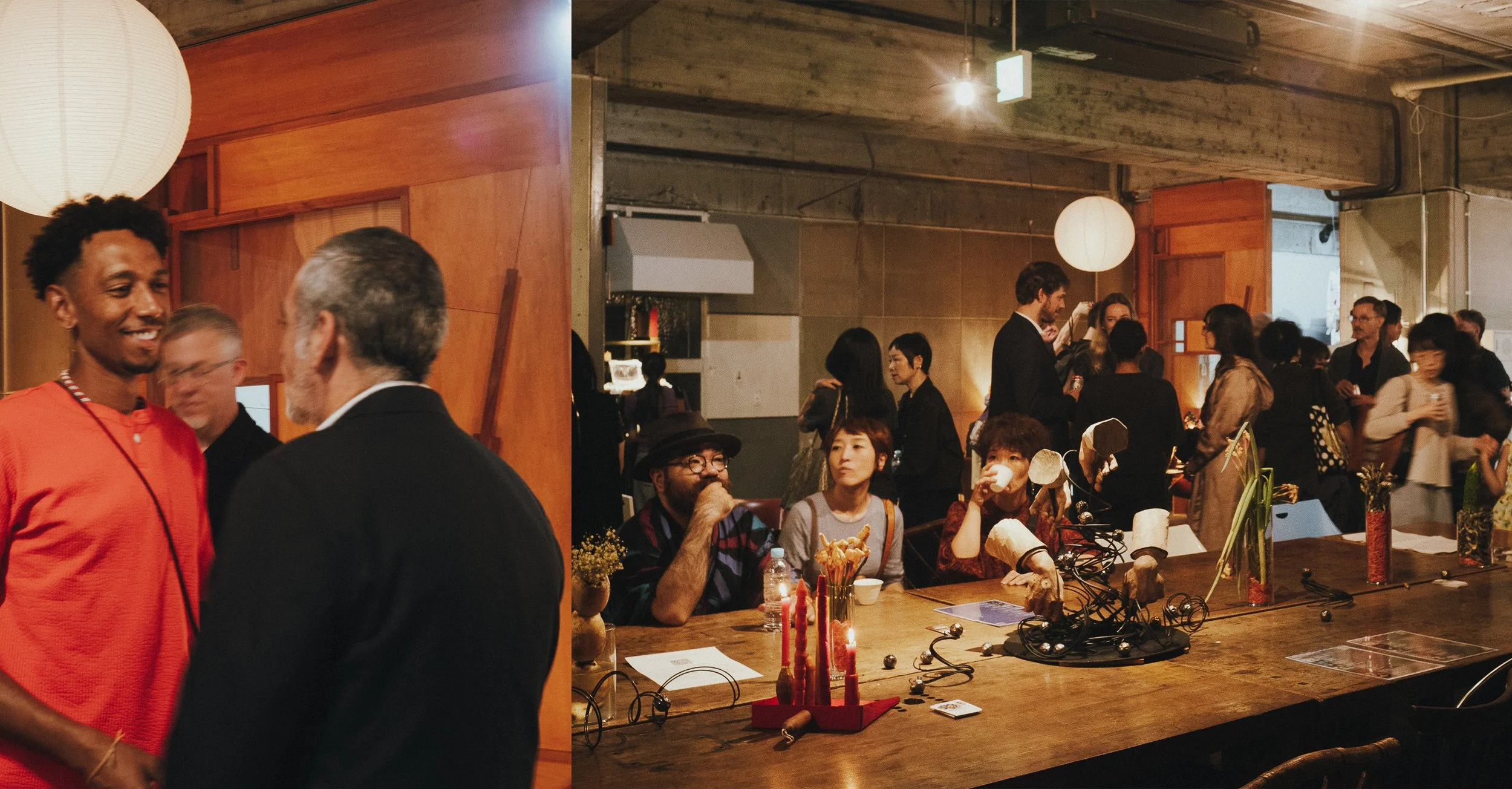
Cal speaks with NAFAS Curator, Lucien Zayan, at opening reception. A group of candles in the Buoy Art Center cafe. Photo Credit: Maki Indo
Less than two weeks ago, my partner Joseph and I were in Tokyo participating in NAFAS Festival, a group exhibition of artists from around Japan and the globe exploring the intersections of food and art.
For my contribution to the show, I brought handmade candles, an homage to my homeland and a gesture seeking connection with hominids’ ancient relationship with fire tending. A week before landing in Tokyo, I saw a video of fourth-generation Japanese candlemaker Satoshi Onishi calling attention to the disappearance of fire from contemporary society and its replacement with technology that is “safe to be left unattended.”
“If the ability to handle fire is part of what makes us human, it scares me that more people may lose that ability,” says Onishi. An almost absurdly literal demonstration of his point came when I was informed that the gallery’s permit to light candles in the exhibition cafe had been granted by the city.
One year ago, it was this very concern over the loss of firecraft that brought me serendipitously to the front door of Center for People and Craft. More precisely, it began with a conversation with a friend. I told him I was troubled by the way children are left unsupervised with tablets, phones, computers, and AI, while ancient technologies such as blades and fire have been banished from classrooms because of the liabilities surrounding their inherent dangers. He said, “You should meet Anna. I think you’re on the same page.”
Anna walked me around CPC days before the first big community event. It was an exciting mess of energy: volunteers repainting daycare-pink walls, organizing boxes of materials and tools, and unloading furniture from the back of a car. There was a palpable sense that anything was possible and that my deep love of craft and community could be nourished here. At the time, I was working full-time in a cubicle for the university; walking through Center for People and Craft reminded me of the sort of work I really wanted to commit my life to. Before I knew it, my evenings and weekends were dedicated to the creation of an emerging urban folk school, and eventually I became a co-director alongside Anna.
Those early months were a buzz of meetings, dreaming, financial planning, telling a compelling story to bring more people into the fold, building webpages, building a board, and developing a mission. Being part of a start-up is a heady experience.
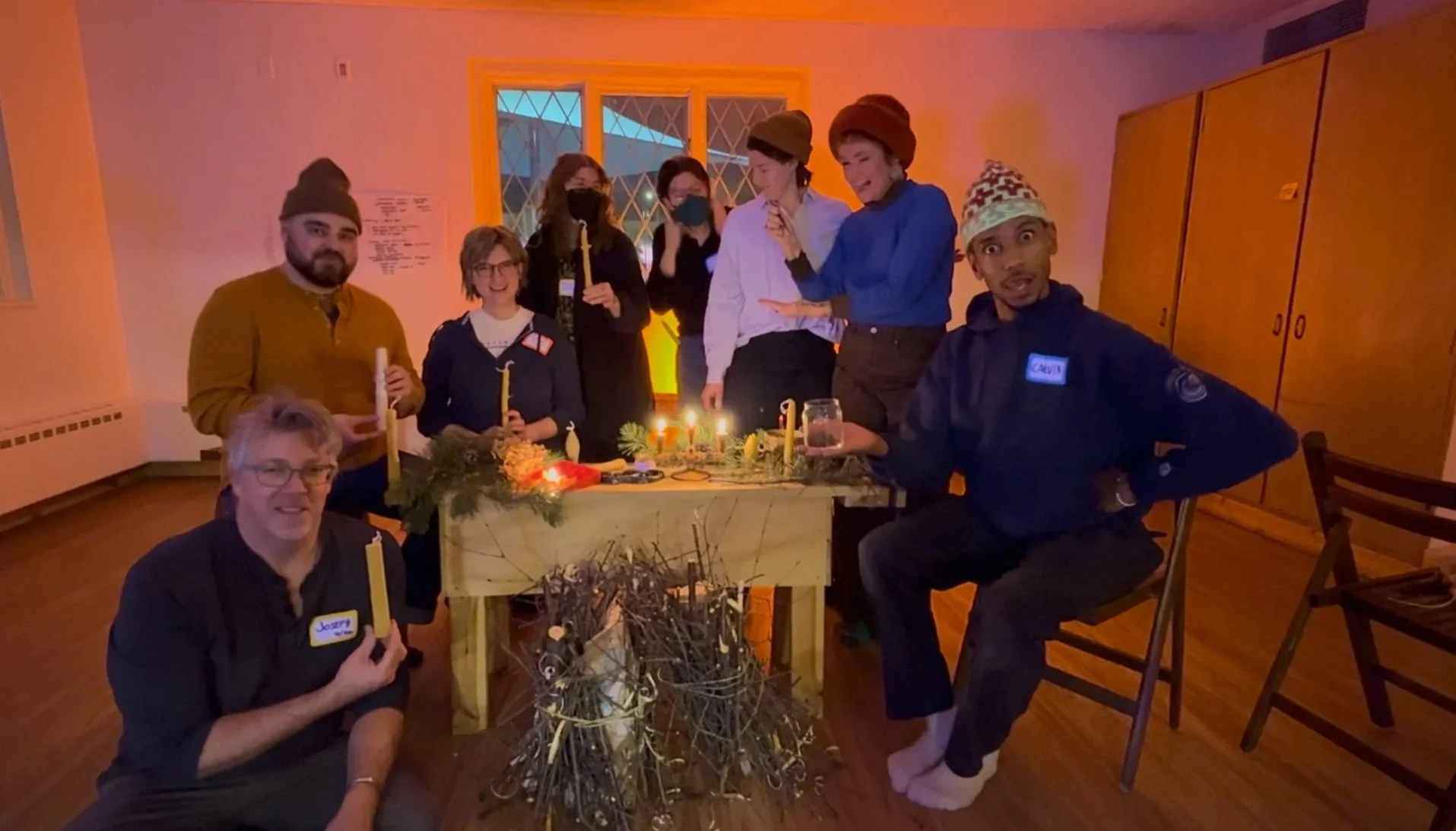
Evening class of Candlemaking on the Winter Solstice, the first class taught at CPC. December 2025
Candlemaking on the Winter Solstice was the first workshop offered at Center for People and Craft in 2025. With one class in the morning and one in the evening, I had the opportunity to share a practice I’d been developing over the past three years. The workshops gave me a space to investigate difficult truths about home, history, and cultural artifacts through a workshop that centers beeswax and buckthorn.
A year later, preparing to teach candlemaking during NAFAS Festival Tokyo, I had to figure out how to tell that story in an hour for a mostly Japanese-speaking audience without the entangled context of Minnesota/Mni Sóta Makoce. I adapted a messy two-day workshop into something suitable for the tatami-mat living room of Asahi-so, an artist-run collective and home in Tokyo. Making the slideshow to introduce myself, my practice, and the manoomin a friend harvested and that we prepared as porridge brought the stories at the heart of my work into focus. I found myself trying to articulate, in the simplest language, gestures, and images, the layered histories of where I come from: the people, ecology, violence, resistance, and events that continue to shape how I understand “home.” The act of reducing all of that to something that might survive translation made certain things incredibly clear to me, some of which, I believe, survived and resonated.
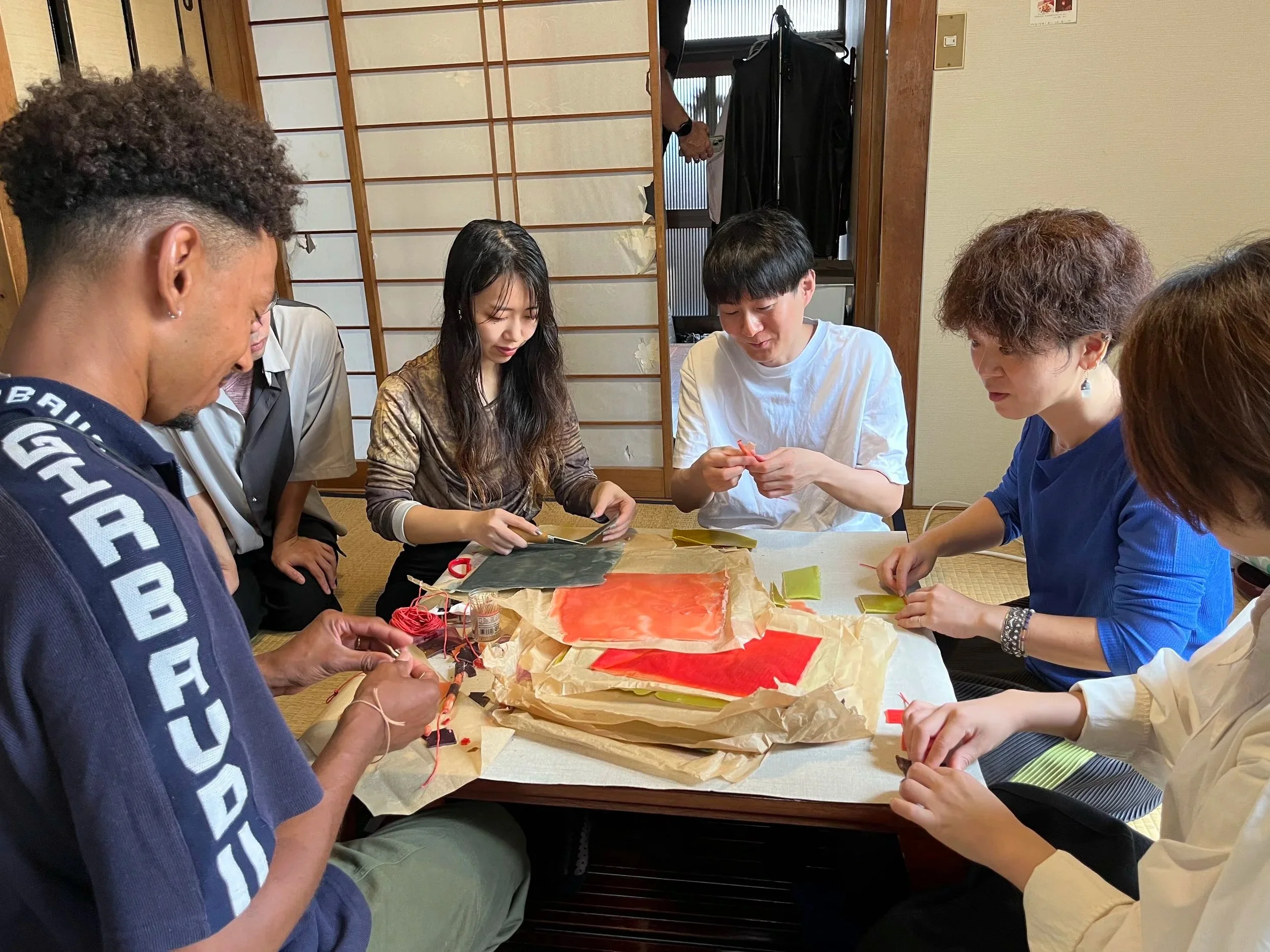
Making hand-rolled beeswax candles at Asahi-so artist collective in Adachi-Ku, Tokyo. Photo credit: Natsuki Uchiyama
Before leaving Japan, Joseph and I traveled to Takashima, a small town on the western shore of Japan’s largest lake, Biwa. I wanted to visit Daiyo, the fourth-generation candle workshop led by candlemaker Satoshi Onishi. From the outside, Daiyo appears to be a nondescript residence, with the only indication of its actual business being the wooden cutout of a candle hanging from a tree. Inside was a small shop featuring several lines of rice bran and sumac wax candles, holders, and incense quietly displayed on wooden shelves. Nervous and excited, I explained to the man who appeared that I had seen the video, that I wanted to offer them a candle I made—a gesture of gratitude for the message that called me—and to buy candles to bring home.
Visiting Daiyo was a craft pilgrimage that showed me what it looked like to commit a lifetime to a particular craft. When I was led down the hall from the public-facing store to the workshop, I was surprised to meet half a dozen people quietly working together. Satoshi Onishi was stirring a bright red pot of wax on a gas burner. Two women sat at a low table scraping and shaping candles with knives, while one man organized wicks and another boxed candles.
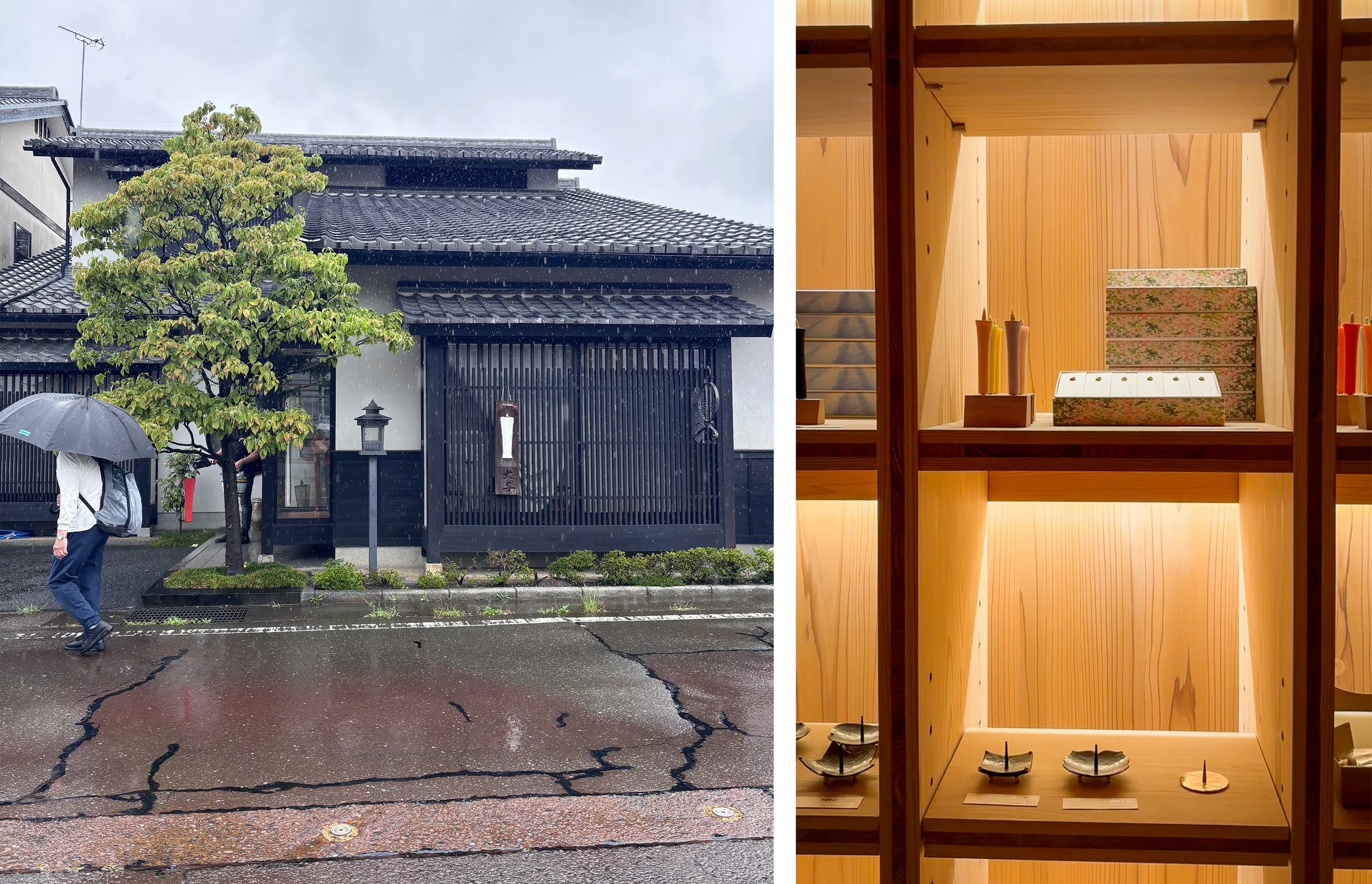
Daiyo, a 4th-generation candle company in Takashima, Japan.
This is what it looks like to be in the candlemaking business for four generations: focused, quiet, repetitive, attentive to detail, committed to the life of the business and to the people who depend upon it for their livelihood, even as the world outside updates and upgrades its technology. Social media and digital technology certainly help sustain the business, but they cannot replace the physical reality of the work.
As we left Takashima on the train and returned to Tokyo, I kept wondering how I might commit to developing a craft that could sustain not just my livelihood and the livelihoods of others for generations to come, but continue the story first told by our earliest ancestors.
Less than 24 hours after landing in Minneapolis, Anna and I stood in front of a crowd of people who had shown up for Center for People and Craft’s inaugural Money Honey fundraiser and tried to express our gratitude for their support and commitment to the dream of creating an urban folk school in our city. Money Honey was conceptualized and organized almost entirely by volunteers with a goal of raising $10,000 to support greater capacity-building and programming for our young organization. I spent much of the evening sharing the candle making workshop I developed for NAFAS.
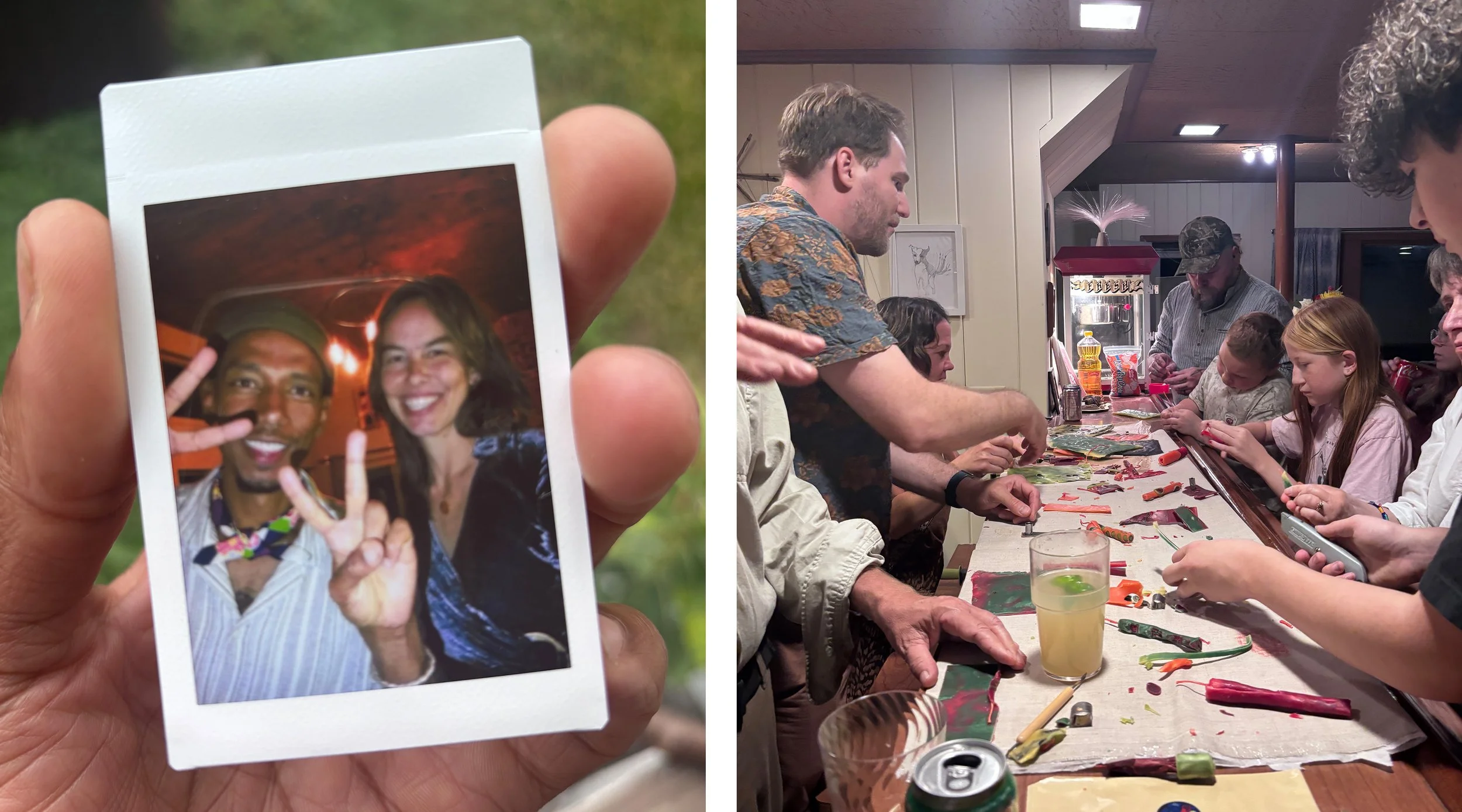
CPC Co-Directors Cal and Anna at Money Honey Fundraiser. Visitors making hand-rolled candles at the event.
The following day, we hosted our One Year Birthday Party, and again I tried to find words to honor the community and magic that is coalescing while also speaking to the importance of craft in today’s human-erasing technosphere.
To date, hundreds of people have walked through our doors to join free community events and potlucks, take classes led by long-time and first-time instructors, attend song circles organized by community partners, or simply “find out what’s going on.” Our doors would not be open without the dozens of volunteers who show up every day to welcome guests and maintain a beautiful space, or the people working behind the scenes to manage webpages, social media, registrations, finances, grant reporting, and the rest of the digital backend.
Anna and I went from full-time volunteers to paid employees, and with the support of our finance wizard, Jen Glaser, we were able to hire Caitlin, our invaluable admin assistant.
The day after CPC celebrated one year, 72 hours after landing in Minneapolis, I packed two suitcases—one with clothes and another with a few materials and tools—a backpack with my tech, and drove in the rain to the northwestern shore of Gitch-gaami. This decision to return home to Lake Superior has been years in the making, born of a need to escape the cubicle, to retreat, reorient, and connect deeply with the story of craft and my role in transmitting it to future generations.
For the next year, I will be at North House Folk School as part of its Artisan Development Program. The last time I had this kind of opportunity to commit fully to my own work was after college, when I returned to Duluth and opened an art gallery and studio with a friend.
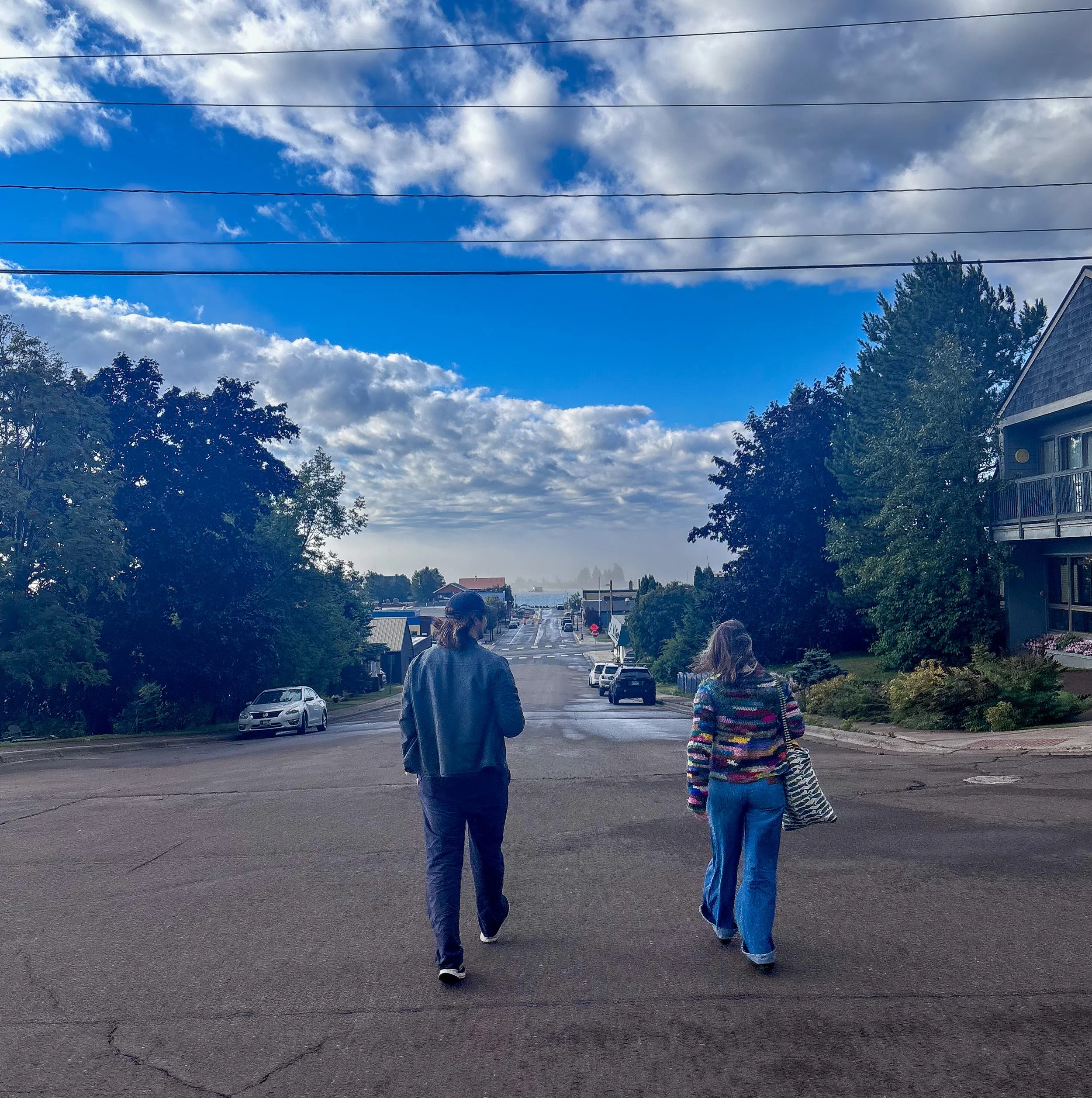
ADP Cohort X walking to our first day at North House Folk School, Grand Marais, MN
I am deeply humbled by the chance to do this now. It means leaving my family and our dog, stepping away from the daily work of our shared life, and contributing to the sustainability of our home in the way I normally would. My family is making an enormous sacrifice so that I can spend the next two years on my craft, with the hope and trust that doing so is critical to the continued building of our shared lives that are deeply inspired, meaningful, and nourished by doing that what we’re called to do.
It also means that I’m stepping away from my role as co-director of Center for People and Craft, confident in the powerful, visionary group of people who will carry its mission forward. I will continue to champion CPC’s mission from afar while turning my attention toward the stories of craft, the people who center their lives around it, and the work of helping those stories continue.
Stay in touch! Sincerely, Cal
