
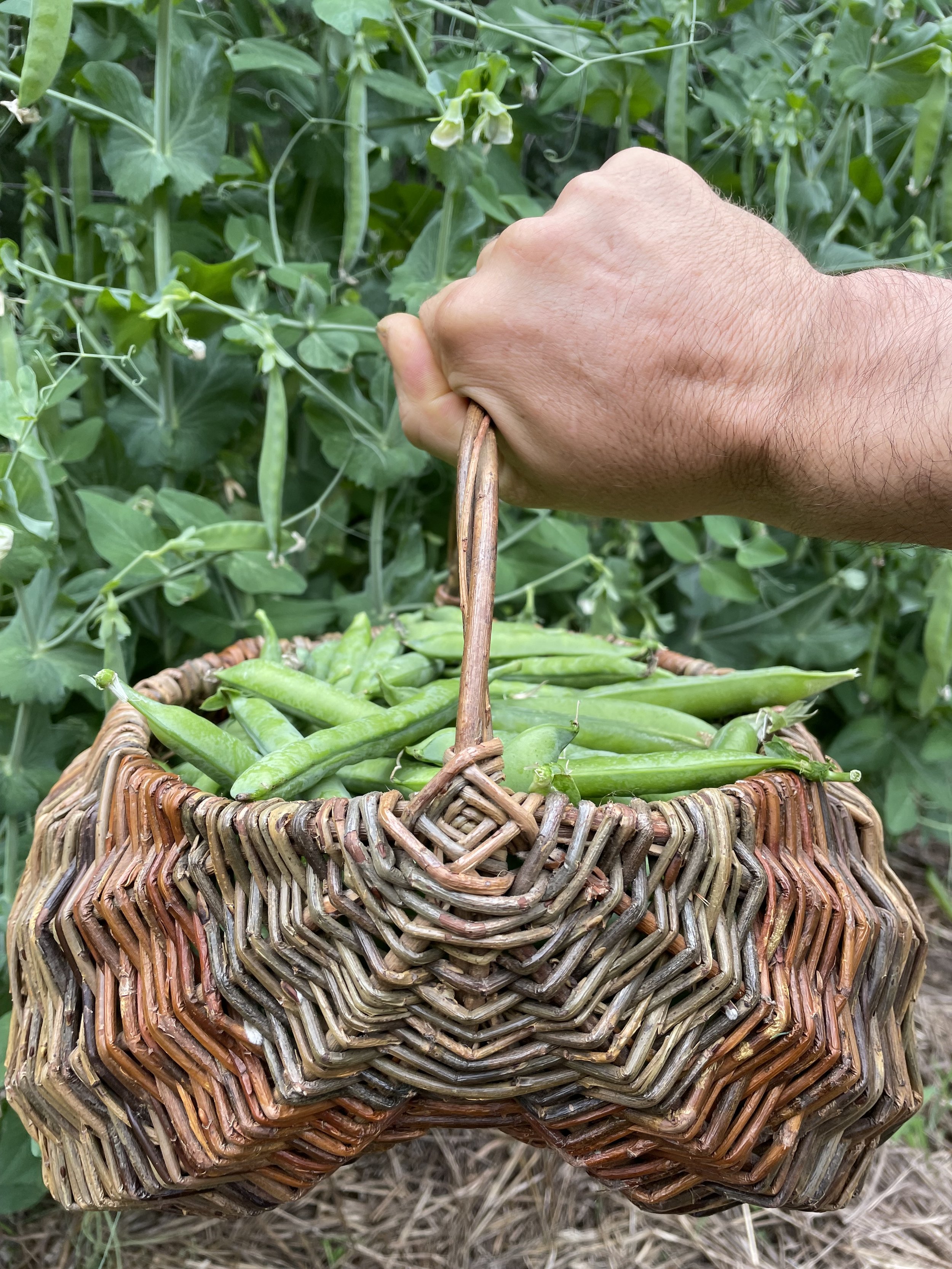
Small Ribbed Willow Basket
Zac Fittipaldi and Maddy Boler
In this full day willow weaving class at Center for People and Craft in Minneapolis, students will use willow to make a rounded bottom butt basket, perfect for beginners or experienced weavers!
DATETIMECOSTAGESKILLFEESaturday December 19, 2026
9am - 5pm
$160
16+
Beginner
$30, Paid to instructor
REDUCED TUITION AVAILABLE
Spend a day weaving a rounded-bottom “butt basket” from willow. This traditional ribbed basket gets its name from the two gently rounded halves of its base. Farm families used these baskets for gathering eggs, since the curved bottom kept them from rolling around. Today we reach for ours for everything around the home and garden: carrying vegetables in from the beds, holding kindling by the stove, or keeping yarn within reach.
You’ll build the basket from the frame out. As you go, you’ll learn how to work with willow’s natural spring and how to keep the shape balanced. You’ll also see how a handful of simple moves turns into a strong, graceful form.
This class works for first-time weavers and for experienced basketmakers. Beginners will come away with a solid foundation in ribbed construction, and experienced weavers can concentrate on tension, shaping, and finish.
By the end of the day you’ll take home a sturdy handmade basket built for real use, one that can last for generations.
WHAT YOU’LL MAKE
Short history of willow basketry
People have woven baskets from willow for thousands of years. It’s one of the oldest crafts we know of, older than pottery in many parts of the world. Willow grows quickly, roots easily, and sends up long, flexible shoots when it’s cut back. That made it a dependable material wherever it grew. Across Europe, farmers coppiced willow beds, cutting the plants to the ground each winter so they would send up a fresh crop of straight rods, or “withies,” the next season. Some regions built whole economies around the practice. In England’s Somerset Levels, willow has been grown and woven commercially for centuries, and growers still harvest it there today. Before cardboard, plastic, and metal bins, baskets carried almost everything: fish, bread, laundry, firewood, harvested crops, even goods traveling by ship and rail.
The ribbed basket is one of the most enduring of these forms. Its frame of crossed hoops with ribs woven between them is generally traced to the British Isles and Northern Europe. Immigrants brought the form to North America, where it took root in Appalachia and other rural communities and was often woven from whatever material grew nearby, such as white oak splits or willow. Farm families made and used these baskets for everyday work, gathering eggs, carrying produce, and hauling goods to market. The skills passed from hand to hand within families and communities. Today weavers keep the tradition alive both as a working craft and as a link to generations of makers who shaped these same curves by hand.
-
Participants will need basic hand and arm mobility for preparing substrates, assembling grow kits, and inoculating bags. Some tasks require attention to detail and the ability to see small materials clearly.
CENTER FOR PEOPLE AND CRAFT is committed to building a diverse, inclusive learning community where people of all backgrounds feel welcome and able to participate. As we launch our first workshop series, we are dedicating space in each class for reduced-tuition scholarships to support anyone facing financial barriers. As we build a more robust scholarship program, we hope this initial launch will remove barriers and expand access to hands-on learning for all.
Anyone with financial need is encouraged to apply for a half-tuition scholarship. To be considered, please submit a brief online application. Please note that CENTER FOR PEOPLE AND CRAFT is operating with limited financial resources and an entirely volunteer staff. Therefore, we cannot guarantee a spot for every applicant. Each class has one scholarship slot available. Applicants who are not selected in this current round are welcome to reapply. Apply here
-
CPC is able to provide refunds up to two weeks before the start date of the class for which the registration was submitted, though we do retain a $20 fee for return payment processing. If you need to cancel your class within the two week window, a refund is not guaranteed, but will be considered based on several factors.
If CPC needs to cancel a class due to low enrollment, teacher illness, or other factors, you will receive a full refund. Read our full set of policies.
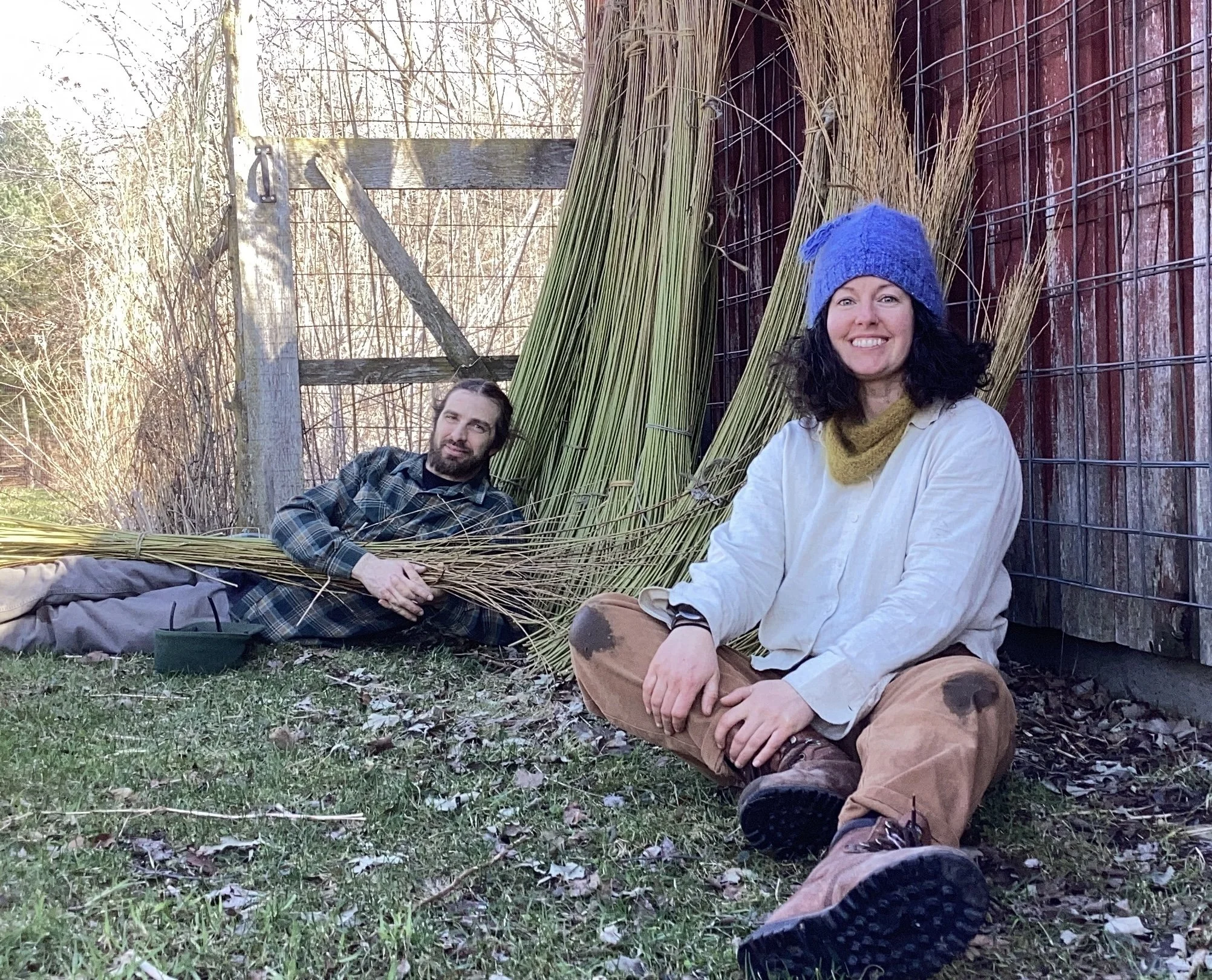
MEET YOUR INSTRUCTORZac Fittipaldi and
Maddy Boler
Zac and Maddy are willow growers and basket makers, with an emphasis on Black Ash, Willow, and Basswood. We grow basketry and ornamental willow. All the black ash is harvested from local wild trees, and hand pounded. We live a subsistence lifestyle as much as possible, from our food (lots of venison and wild rice) to our daily living (heating our home with wood fire and hand pumping our water). We love weaving with students!