
An Emerging Residency Program
What is your craft?
What do you call yourself?
Craftsperson, artisan, artist, practitioner?
At Center for People and Craft we’ve welcomed folks into our space who are in need of a place to make their work. After opening in September 2025, our first resident, Riley Kleve, set up shop. They spin and hand-dye lavishly textured yarns that are then woven, stitched, and mended into textiles serving as a pathway for exploring queer identity and relationships. As an artist and educator working across many traditions, their loom and spinning tools were at home in our newly renovated space and became anchors for what would become a growing community of resident artist and artisan practices. As Riley concludes their second year in North House Folk School’s Artisan Development Program, they’ve just embarked upon a bigger endeavor by relocating their studio to the Seward Weaver’s Collective started by the late Barbara Heath and collaborators.
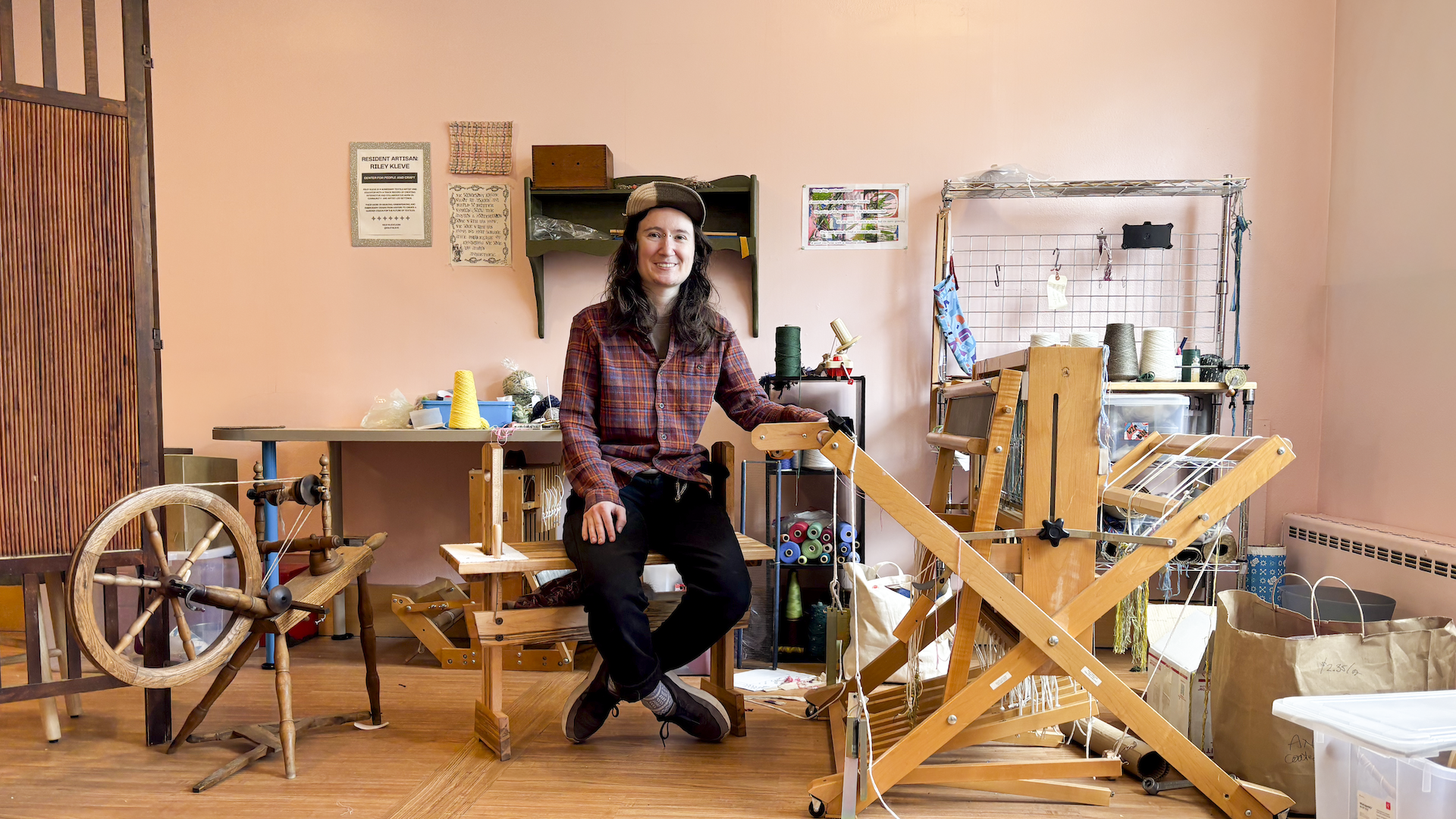
RIley Kleve in their studio The Pink Room
Shortly after Riley’s arrival, artist Werner Glinka joined the community, creating mixed media assemblage and wall sculptures while writing about technology, labor, and what happens when industries leave people behind including a recent blog where he wrote about the contemporary folk school as a talisman to fascism, a concept rooted in the early formation of folk schools in early 19th Century Denmark. Werner’s studio is full of prototypes and experiments as he develops recipes for a sort of papier-mâché that pairs well with cardboard to make three-dimensional wall sculptures that speak to his homeland in the deindustrialized Ruhr Valley of Germany.
Though classes are the time when our space is most active with people, we dream of a center that’s abuzz ’round the clock with folks practicing their crafts and art while sharing it with the greater community through workshops, open studios, and over coffee and tea in our lunchroom / small kitchen.
It’s often said that Minnesota, and the Twin Cities in particular, are a great place for artists to live due to the plethora of available grants and institutional funding. Still, it may come as no surprise that finding a place to create, make a mess, and be surrounded by a community that supports and pushes one’s practice is increasingly cost prohibitive.
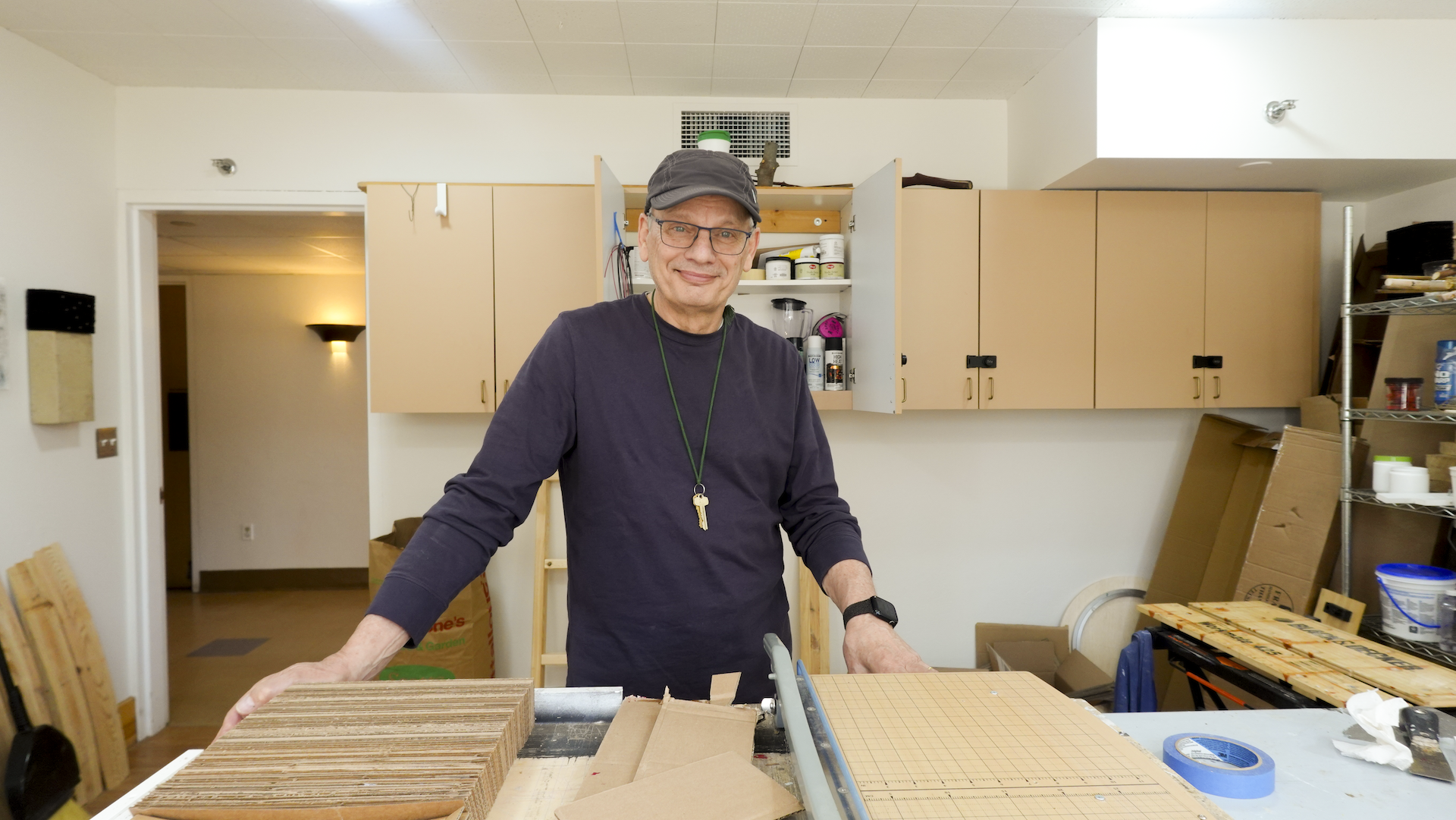
Werner Glinka in his studio
Our newest resident, Shug Munic, is an example of an artist practice that has evolved and developed in response to the constraints of the home-studio practice. Based in Powderhorn, Shug is an interdisciplinary textile artist, educator, and community organizer using traditional sewing, quilting, and other craft techniques to tell stories of devotion through the mundane in the epoch of collapse. In April, they moved into The Pink Room at CPC, where every day new works emerge on walls, on tables as sculptures, and in the world, as in their newest work, Queer Keys, on view at The Smallest Museum of Saint Paul outside of Workhorse Coffee through the end of July.
Nine months since opening, it’s become clear to us that the presence of working artists, artisans, craftfolk, and creative practitioners is an essential part of the everyday work toward our greater mission. In the coming month, we will announce a new opportunity for more people to make a home to further their individual practices rooted in a community center dedicated to people and craft.
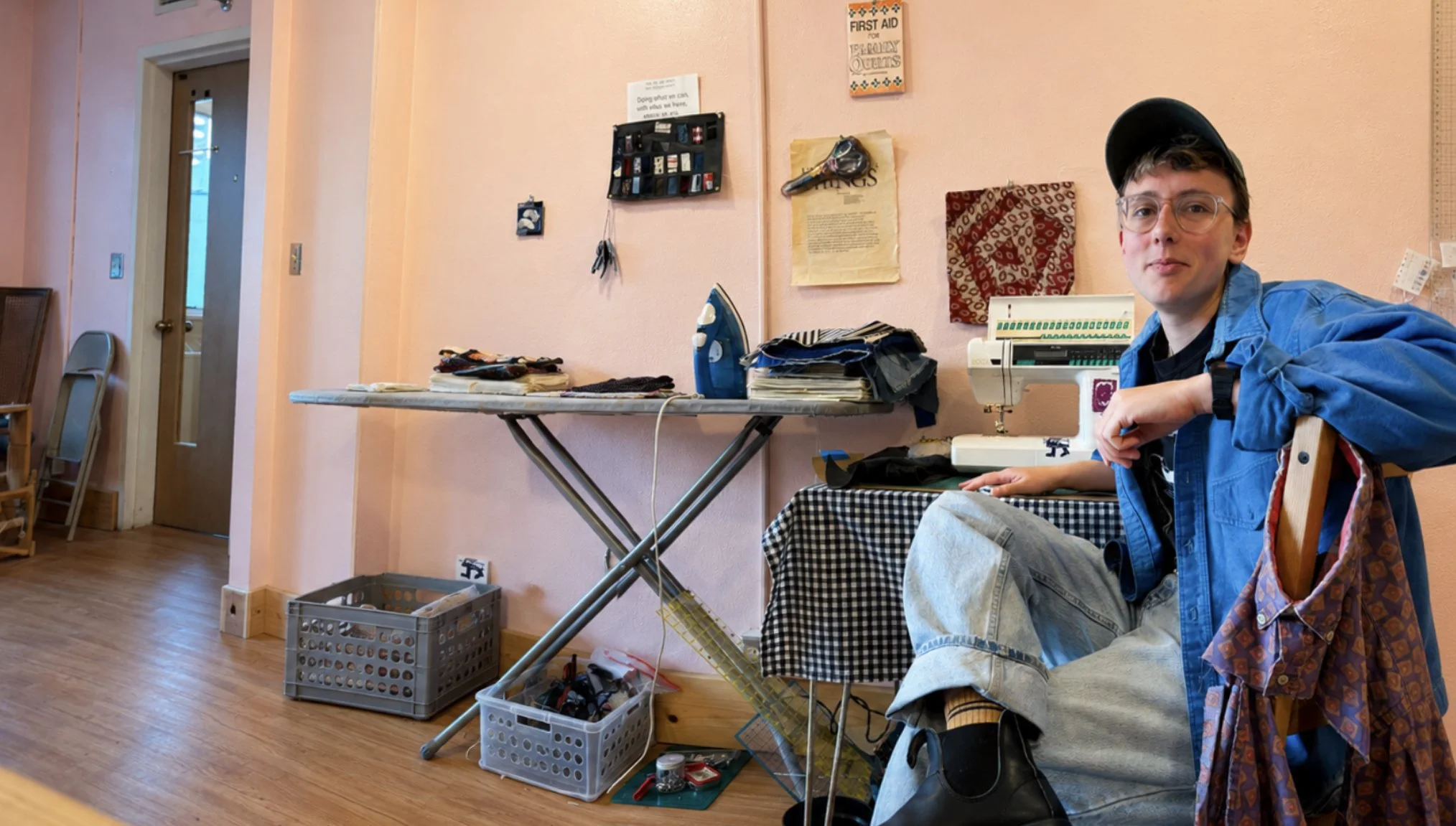
Shug Munic in their studio The Pink Room
What will this look like? Well, the details are still being figured out, but we’re hoping to pilot a program starting with four people who are looking for a place to deepen their practice, share their work with others, and become part of the everyday life of Center for People and Craft. This may include access to shared work space, tools, teaching opportunities, open studios, and a community of people who understand that creative practice needs time, access to space, material support, supportive relationships, and networks of reciprocity.
As we continue to grow, we’re learning that a folk school is not only sustained by classes, but by the people whose practices give the space its life. Artists, artisans, craftfolk, and creative practitioners bring their histories, communities, questions, and ways of making with them. Our hope is that CPC can become a shared home where those practices are supported, where new teaching can emerge, and where more people can find their way into craft through the people already living it.
