
Reflections: ‘IlluminatIng Invasion’ with Cal Stalvig
A blog post written by Resident Artist, Shug Munic
I didn’t know much about buckthorn before taking Cal’s candlemaking workshop.
Buckthorn is an invasive plant that was originally brought to Turtle Island through colonization from Europe. Not only does buckthorn spread extensively but it outcompetes native plants, meaning that as it grows, buckthorn takes resources that prevent native plants from growing. This competition for resources threatens forests and wetlands, impeding natural habitats from growing.
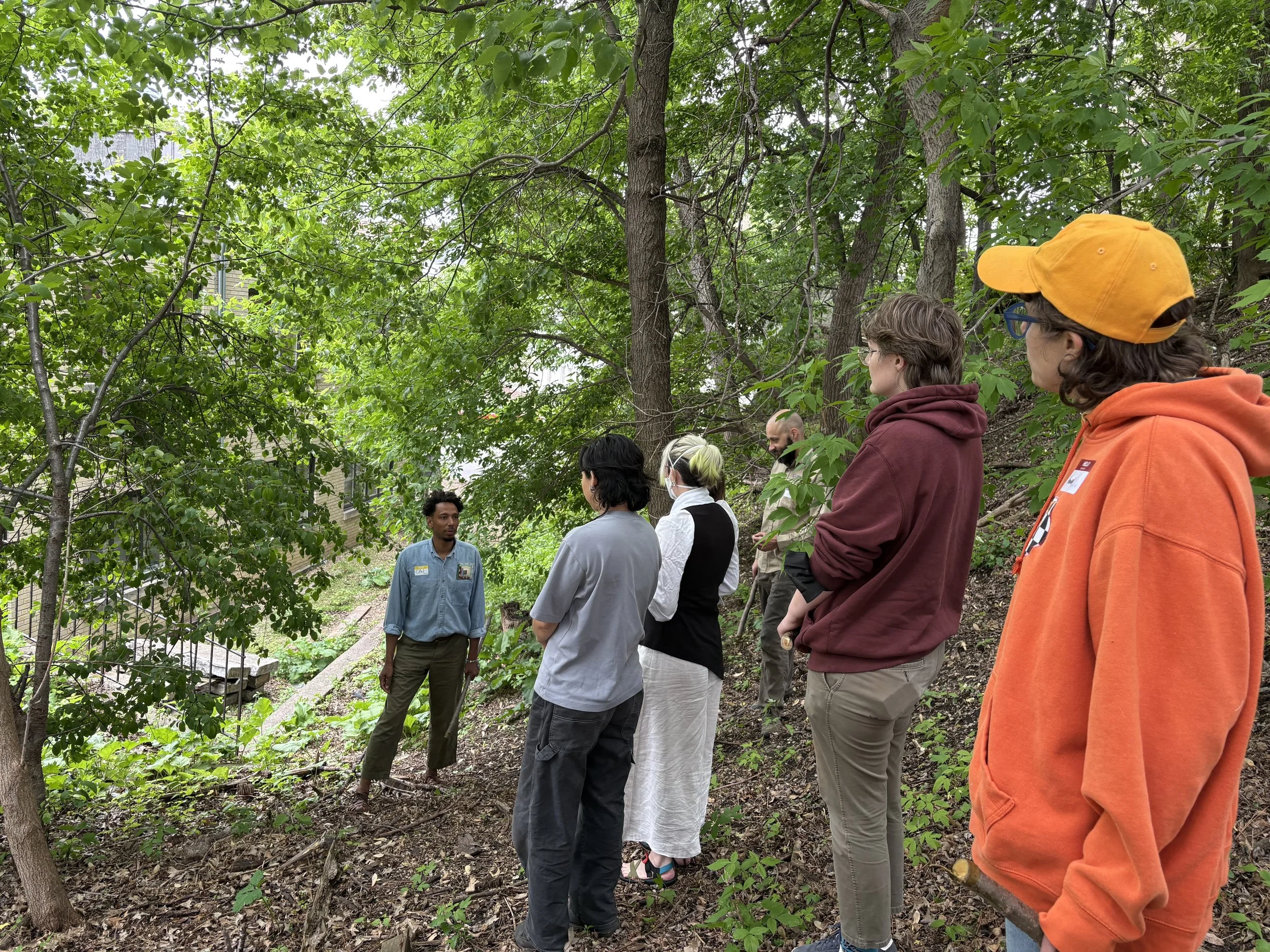
Instructor, Cal Stalvig, pointing out characteristics of buckthorn as we practiced the act of looking for and finding it.
But it is still here and it is here abundantly. In Indigenous teachings, plants are our relations, and Cal reflected that an unhealthy relationship is still a relationship that we are in. Cal asked us, like buckthorn, what behaviors are continuously creeping into your life that disturb healthy balance?
In Cal’s relational practice with buckthorn, he forages and carves it into unique shapes to transform into candles. By using buckthorn to create candles, Cal invited us to reframe invasion as an abundant resource to be in relationship with through the act of making. By engaging with the natural resources around us, Cal showed us how craft can hold the potential to transform invasion into a sacred object.
And with that, we started to carve.
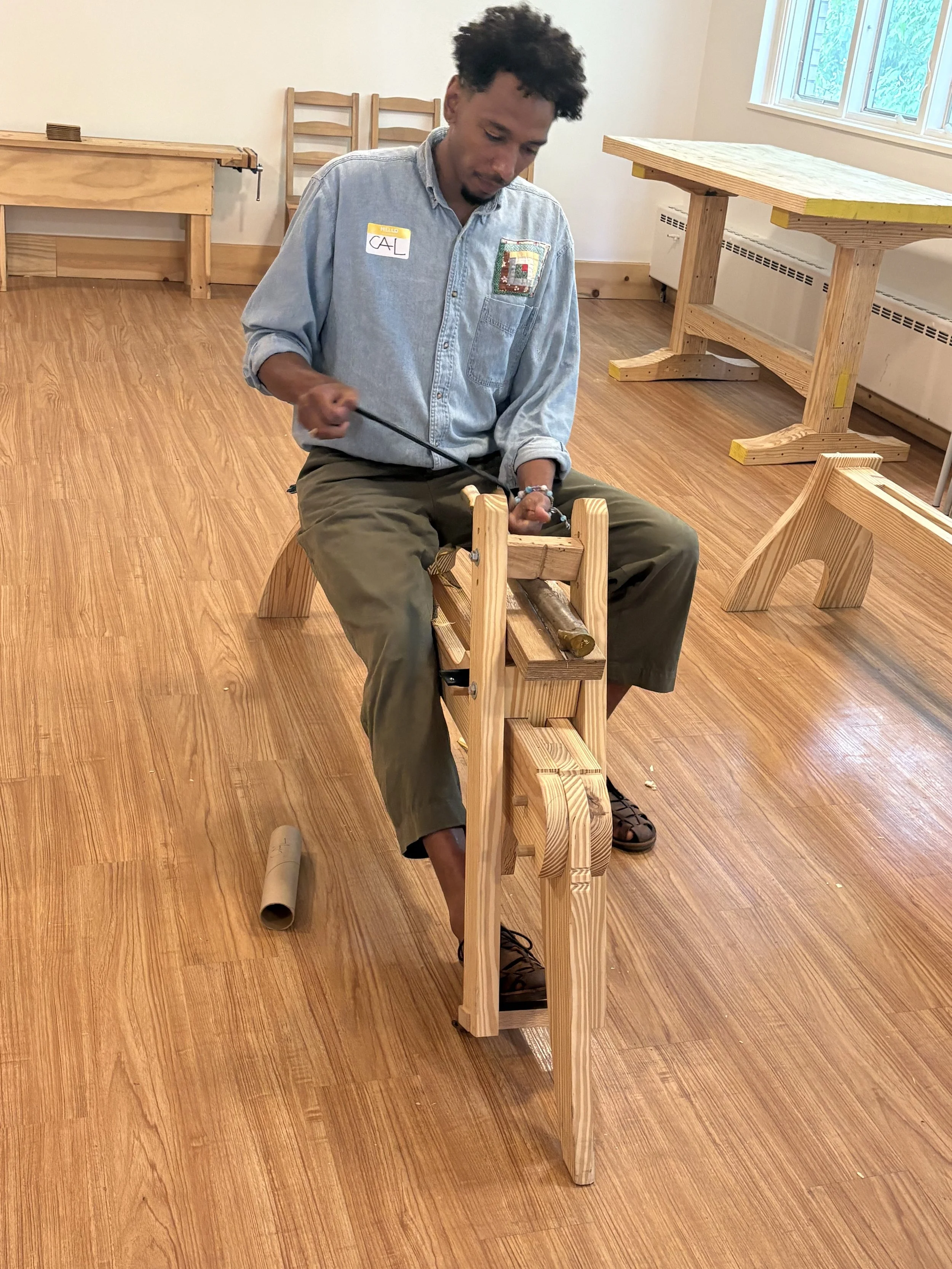
Cal seated on a shavehorse while using a drawknife to remove buckthorn bark.
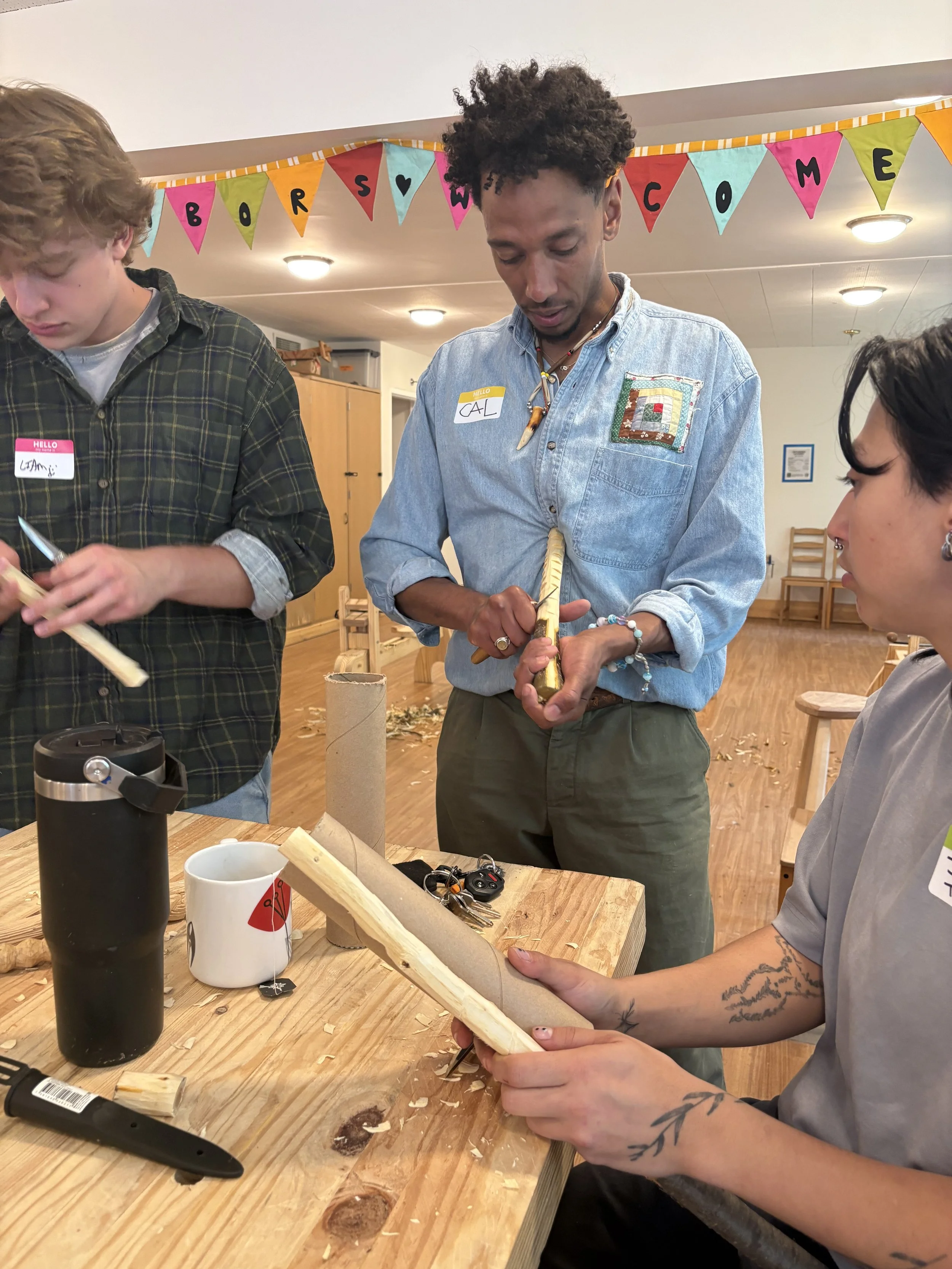
Cal demonstrating safe hand carving practices while participants contemplate their candle designs
It was my first time carving greenwood. It smelled fresh and damp and vaguely of horseradish. Each knot in the wood was a little secret from the material’s original form. Each hand movement with the knife marked time spent creating the mold. We spent the afternoon discovering what hand movements felt meditative and which carving techniques could unearth our desired shapes.
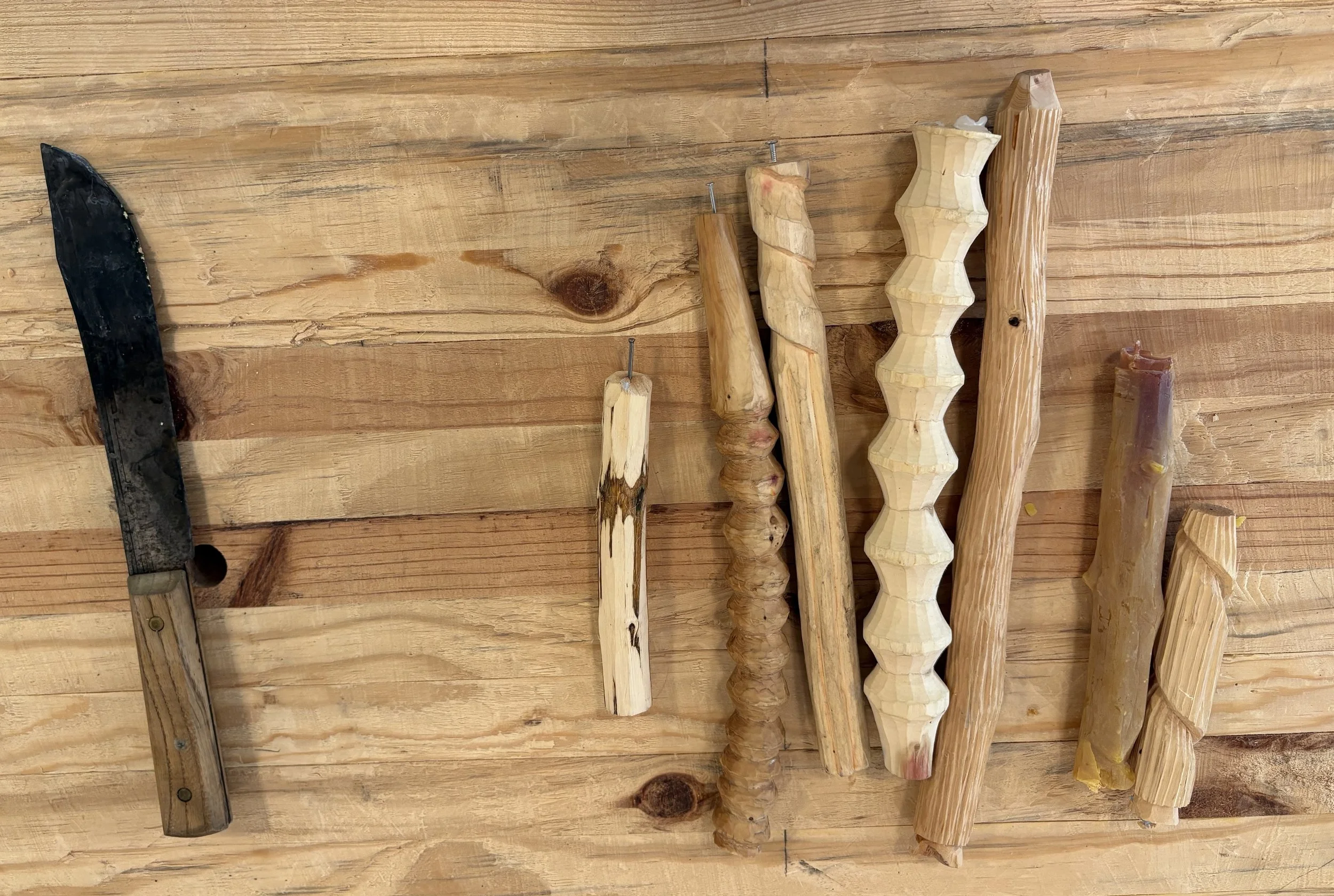
Examples of Cal’s positive candle forms used to make silicon molds
Making molds together was a collective effort. Learning how to calculate how much silicone to mix was a sobering reminder that sometimes artmaking does indeed require math. After crunching the numbers we poured our molds, and let them sit to return the next day for candlepouring.
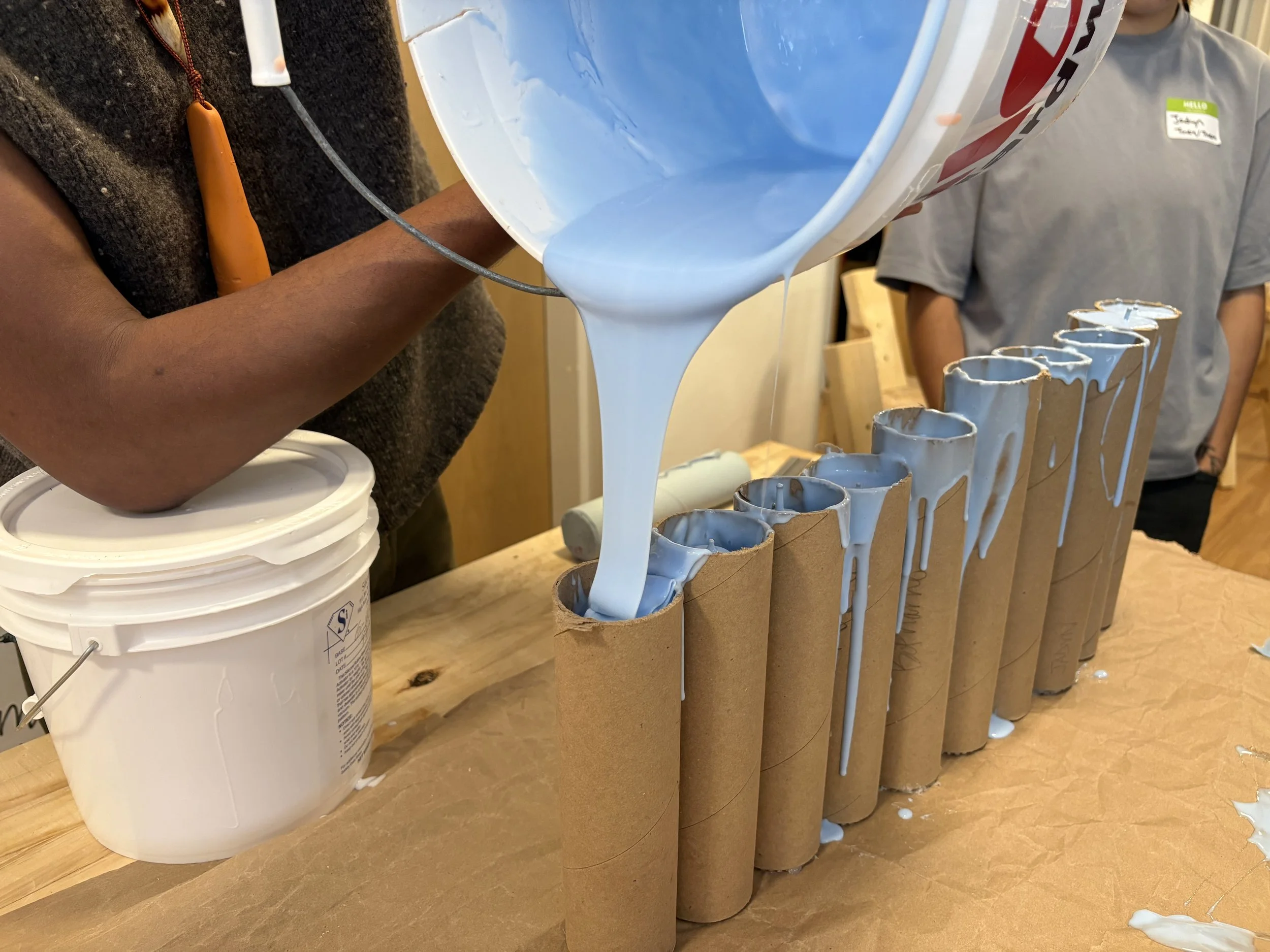
Cal pouring silicone into our molds.
The next day we learned about bees. Honeybee’s are not native to Turtle Island and were also brought here through colonization. Minnesota hosts 25 of the 45 species of bees in the US. I didn’t know that MN has a state bee and we do--the rustpatch. Coming into this workshop I knew that bees are endangered largely due to climate change, but something that I didn’t know about the bee industry is that beekeepers make a large portion of their profits from renting out their hives to farmers to pollinate their crops.
There is such scarcity within this industry that there are hive poachers who will steal bees when outsourced to farms if you’re not careful. Honeybees are a pollinator that is still widely used in US agriculture yet socially we are not making necessary changes to our consumption and environmental practices to sustain them. What does this mean for our relationship with bees? Is this an unhealthy relationship too? Are bees also outcompeting native pollinators? I don’t have all the answers but learning more about how bees and the properties of beeswax definitely deepened my gratitude for the material.
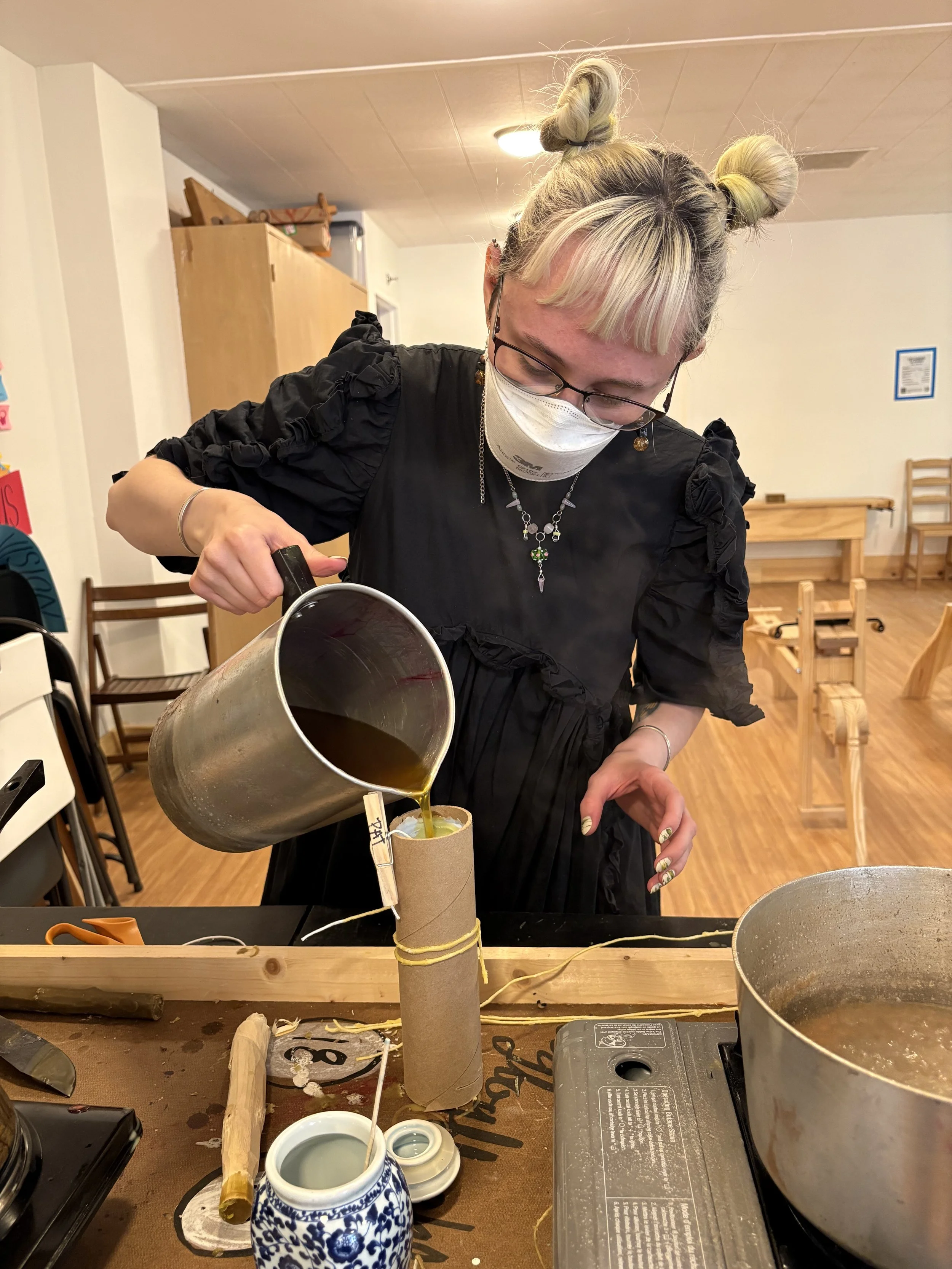
Participant pours beeswax into their silicone mold.
In this workshop Cal invited us to engage with the lineages of buckthorn and honeybees as we created hand carved candles. Not only did I learn tangible skills like how to handcarve wood and make a silicone mold, but it changed the way I look at both of these materials. I see buckthorn everywhere now and in a new light, as an abundant resource, and something I want to keep working with. I see beeswax as something to cherish and practice gratitude for.
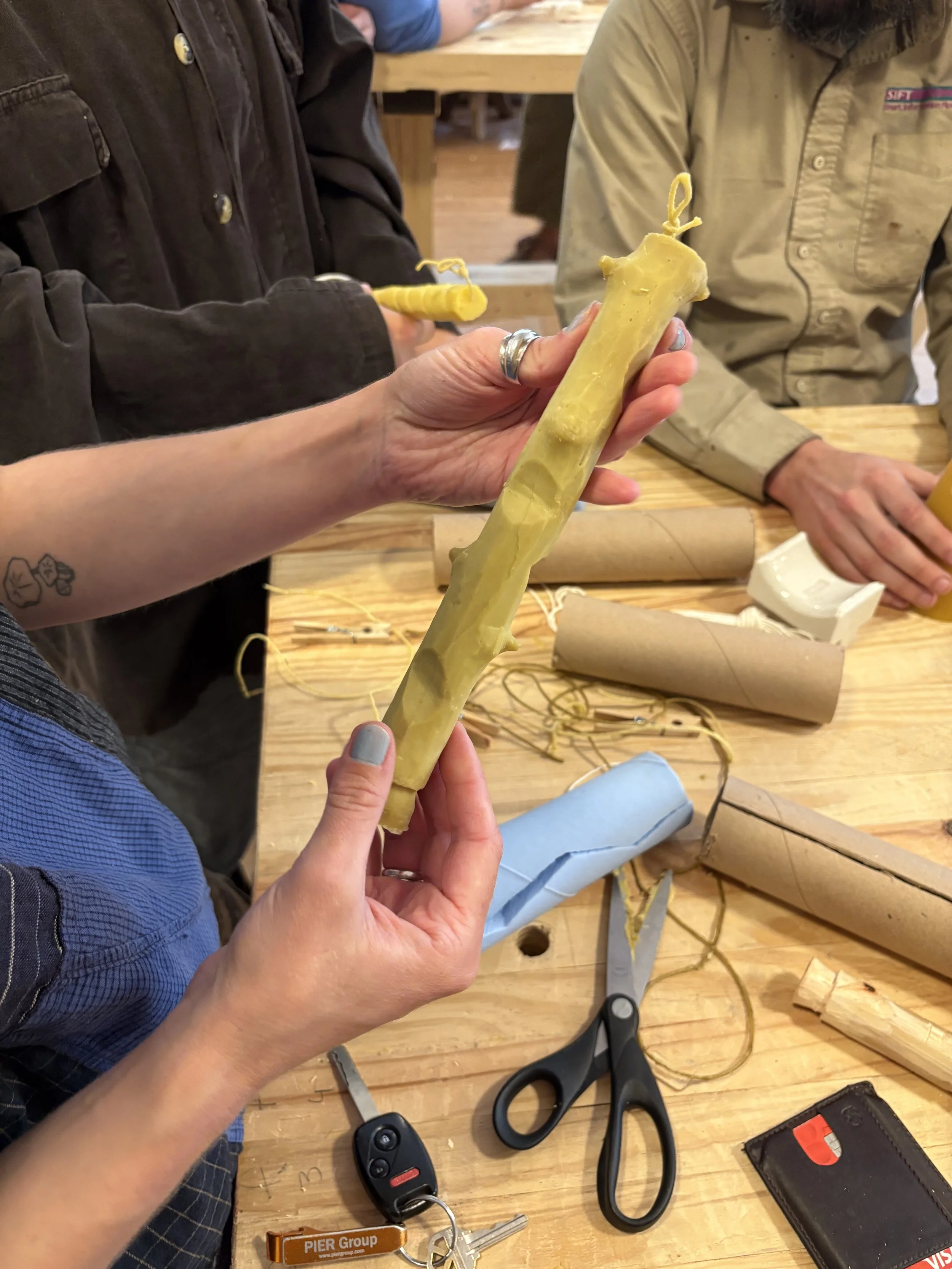
Participant holding their candle after removing it from the mold.
What do we learn from working with invasive plants? How do we work with our current material reality, and how can we bring a relational approach to this work? Engaging with invasive plants in this way reminded me of textile artist Aaron McIntosh’s Queer Kudzu project. Kudzu is also an invasive plant to the southern region of the US. It is considered a weed, but it in fact has a variety of medicinal applications. This project asks us, instead of treating Kudzu like a weed, what can it offer us? And similarly, instead of treating queerness as unnatural to the south, how can we embrace queerness in this area? There are many ways to engage with the natural world around us, and I believe that craft disciplines are part of what can help us be in relationship to that world. I believe that craft and learning from one another is the way to discover what is possible. I am so eager to keep learning from one another at the Center for People and Craft to see what is possible.
